|
| Sunset at 10,000' on Mount Shasta. Better hope your headlamp works for that 2am alpine start! |
In two years of traveling and blogging, I have yet to write one product review for Trek Together. This would shock most of my friends and co-guides, as I'm known as a bit of a gear junkie.
It is true: I tend to study websites, catalogs and press releases in my spare time. I know a lot about what's on the market. But unlike the stereotypical gear junkie, I actually don't buy much. Sure, I went through a phase where I acquired a lot of gear pretty quickly as I was just getting into many new sports.
Since then, however, I've reduced my arsenal to a fairly minimal level. This progression (regression?) started before traveling, but certainly after selling most of my belongings and living out of a backpack for two years, I've grown fond of the Spartan lifestyle. So while I love exceptional gear and am always interested in new technologies, I'll only review gear that I feel is of value to you. My focus will be on simple, lightweights products that are versatile. Enough said. On to the first review!
 |
| 3am on Mount Shasta. Five minutes to refuel before continuing our climb. |
Headlamps might be one of the un-sexiest products, but they are probably the most useful. One good headlamp can be used for reading at camp, hiking at night, alpine starts, cycling around town, and even at home. It's worth doing a little research and spending $40 on a good headlamp that will last you ten years, rather than skimp on a generic one from a big box store for $15.
After extensive use, abuse and review, I have determined that the two following headlamps are excellent and would be ideal for most users. Both headlamps weigh less than three ounces and take AAA batteries. They accept rechargeable Lithium batteries, which is a newer development. The strap is adjustable and helmet-compatible. Both headlamps are fairly weather resistant, durable, and easy to use with one button.
The Spot and Tikka have a very bright central LED, which is what I use if I'm actively moving at night, like getting to a campsite after dark or starting up Mount Shasta at 2am. The light is too bright to use casually around camp, and it also wears out the battery quickly. So the headlamps also have a smaller white LED for reading and camp chores, as well as a red LED for maintaining night vision. I love this latter feature as it really allows me to have a better picture of what's around me, rather than what's illuminated directly in front of me. All white LEDs are dimmable. Finally, there is a small indicator light that flashes when the batteries are getting low. This is helpful in case you are about to start an activity, like a midnight hike.
Most headlamps that are smaller/lighter do not have the variety of lighting options to make them useful at camp and on the trail at night. Larger headlamps are heavy, unwieldy, and unnecessary considering the brightness and longevity of modern LED bulbs.
Black Diamond Spot

The Spot has a powerful 90 lumen LED that last 50 hours on maximum brightness. Of the other four small lights, two are red LEDs and two are white. I use the white lights for eating and reading. I use the red LEDs all other times at night. The red LEDs allow me to maintain good night vision as my pupils don't dilate as much.
Petzl Tikka Plus

The Tikka Plus has a less powerful white LED, rated at 50 lumens. At maximum brightness, this will still throw light 35 meters (115 feet). So, that's still plenty powerful! However, Petzl went with a simpler setup by using only one white LED, but allowing it to be dimmed significantly and last 150 hours. There is also only one red LED, which works to the same effect as the Black Diamond Spot.

The Tikka Plus clearly has a more svelte appearance, but they are nearly identical in size. The casing on the Tikka Plus is also transparent. While this doesn't serve a practical purpose, it looks pretty cool.


[Disclaimer: I have no financial interest in reviewing these headlamps. However, I do received a very small commission if you buy anything through this Amazon link. This helps pay for this website and photo hosting. If you'd prefer, you can go directly to Amazon, search for these products, eliminate my commission, and give Amazon all of your money. Either way, you pay the same price.]
* * * * *
1 Year Ago: Hiking and skiing in Chamonix, France
2 Years Ago: Minimizing Risk

 , which is waterproof, crushproof, dustproof, freezeproof, sneezeproof, chocolateproof and dannyproof. I sometimes like to brag about the invincibility of my camera by "accidentally" dropping it in front of unsuspecting acquaintances. While I get a kick out of that, Kristin chides me that I don't need to prove the camera's durability, and that someday I might actually break it. This is my third waterproof camera and I have not broken one yet . . .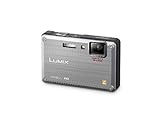
 of this camera is cheaper than the old one that I have.
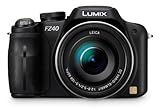
  with various lenses and such, I have found a new breed of cameras that is bridging the gap between simple point-and-shoot and professional DSLRs. These newest generation of "super-zooms" have a really good set of features, take great photos, and are not prohibitively expensive.